FIRE MARSHAL CERTIFICATION
Minimum Standards and Credentialing
The Fire Marshals Association of Oklahoma recognizes the need to have formal minimum standards requirements in order to ensure all aspects of fire prevention are understood within the State of Oklahoma. Credentialing, certification and higher education in conjunction with experience play a vital role in helping to establish the minimum expectations for the position of Fire Marshal within our public safety sector.
Why Standards Matter
At its core, minimum standards act as a baseline, setting expectations for knowledge, skills, and ethical behavior within a profession. Credentialing processes, such as certifications and licenses, then become the tangible proof of an individual's commitment to these standards. This validation not only instills confidence among consumers and employers but also promotes a culture of continuous improvement.
Protecting Public Safety
The impact of these standards is particularly evident in sectors where public safety is paramount, such as first response, healthcare and construction. Licensed professionals in these fields are held to rigorous standards to guarantee the well-being of the public. Similarly, certified professionals in engineering ensure the safety of structures, creating a sense of security for all stakeholders involved.
Professional Growth
Beyond safeguarding public safety, minimum standards and credentialing play a crucial role in professional development. Ongoing education and development requirements associated with credentials ensure that individuals within a profession stay current with evolving practices and technologies. This dynamic, informed, and continually improving workforce benefits not only professionals but also the external stakeholders for which they serve.
Ethics and Accountability
Furthermore, the legal and ethical considerations tied to these standards cannot be overlooked. Regulatory bodies establish minimum standards to protect the public interest and maintain ethical practices within professions. Compliance not only shields professionals from legal consequences but also upholds the integrity of the industries they represent.
Building Trust and Excellence
In essence, minimum standards and credentialing are integral components of a responsible and thriving professional landscape. By embracing and upholding these standards, individuals and industries contribute to a society built on trust, competence, and the perpetual pursuit of excellence.
Fire Marshal / Fire Marshal’s Office
The Fire Marshal is required to meet the Job Performance Requirements (JPRs) of chapters 4 and 5 of National Fire Protection Association (NFPA) 1037, Standard on Fire Marshal Professional Qualifications, 2016 edition.
What is a Fire Marshal?
A Fire Marshal is a person designated to provide delivery, management, and/or administration of fire protection- and life safety-related codes and standards, investigation, education, and/or prevention services for local, county, state, provincial, federal, tribal, or private sector jurisdictions as adopted or determined by the entity.
Key Responsibilities of Fire Marshals
KEY AREA
DUTIES
Administrative Duties
Origin and Cause Investigation
Community Risk Reduction
Community Relations
Mission Specific Responsibilities:
MINIMUM QUALIFICATIONS
Basic Fire Marshal - Certification
Certification holders shall maintain and hold a minimum of four (4) of the following as reviewed and approved by the FMAO Credentialing Committee.
- Holding a minimum, Instructor I certification - IFSAC / Pro-Board.
- Holding as a minimum, Fire Investigator Training through the National Fire Academy (80 -Hr Essentials Course) and/or IFSAC/Pro-Board.
- Holding as a minimum, Fire Inspector I certification through IFSAC/Pro-Board/ICC or equivalent (New NFPA 1030 Fire Inspector).
- Holding as a minimum, Fire and Life Safety Educator I - IFSAC / Pro-Board/CEU Transcript or equivalent.
- A minimum of 2 CRR courses at the National Fire Academy - Self Study (Online).
- Council on law enforcement education and training (CLEET) certification or equivalent.
Advanced Fire Marshal - Certification
Advanced Fire Marshal certification holders shall maintain and hold all required minimum Basic Fire Marshal requirements as well as a minimum of four (4) of the following, including the time requirement set forth by six (6):
- Community Risk Reduction CEUs for the previous 4 years of appointment (Minimum of 12 hours).
- Holding Fire Plans Examiner - IFSAC / Pro-Board or ICC / NFA
- Fire Officer III - IFSAC / Pro-Board or a bachelor’s degree in leadership, Business Management or Fire Service-Related Degree
- Fire Inspector II - IFSAC / Pro-Board or ICC (New NFPA 1030 Fire Inspector).
- Meeting minimum requirements as set forth by IAAI to test for Certified Fire Investigator and each area of requisite knowledge and job performance requirements as outlined in the current version of NFPA 1033.
- Have a minimum of four (4) years of experience within a fire prevention division and 60 hours of college semester hours or an associate degree, which includes at least 18 college semester hours in any combination of Fire Science and/or Criminal Justice. College-level courses from both the upper and lower divisions may be used to satisfy the education requirements for Advanced Fire Marshal Certification
Fire Marshal Training & Certification
Our programs provide the training and qualifications needed to meet NFPA standards. From Basic Certification to Advanced Certification, each path strengthens fire prevention, investigation, and leadership skills for today’s Fire Marshals.
CREDENTIALING APPLICATION WINDOW WILL BE OPEN FROM SEPTEMBER 1ST TO MAY 31ST.
Basic Fire Marshal Certification
Advanced Fire Marshal Certification
To begin the Fire Marshal Certification process, applicants must complete and submit the online application. The Credentialing Committee will review all submissions within 90 days, after which applicants will be notified of their results. If an applicant wishes to appeal the decision, they may submit an appeal through the website, including a detailed reason for the appeal. The FMAO Board will have an additional 90 days to review and respond to the appeal, and final appeal results will then be communicated. All certifications are awarded at the FMAO Annual Conference each August. To be eligible for recognition at the conference, applications must be submitted by May 31st. Applications received after this date will be held for the following year’s conference. For those unable to attend the August conference, certifications will be mailed after the event concludes.
CREDENTIALING APPLICATION WINDOW WILL BE OPEN FROM SEPTEMBER 1ST TO MAY 31ST.
FMAO Credentialing Committee
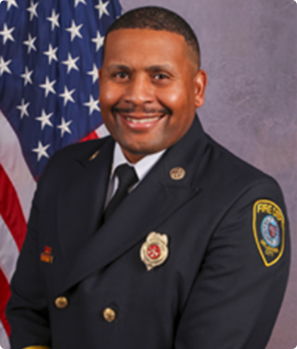
Prince Morgan
Battalion Chief of Code Compliance
Oklahoma City Fire Department
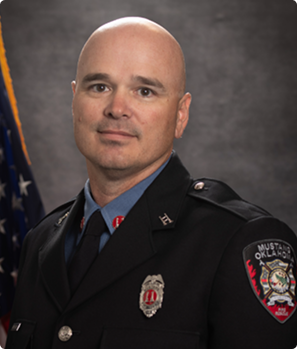
Eric Halter
Fire Marshal
Mustang Fire Department
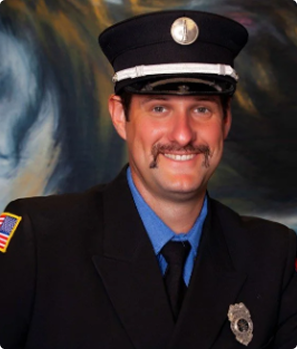
Johnathan Cates
Fire Marshal
Claremore Fire Department
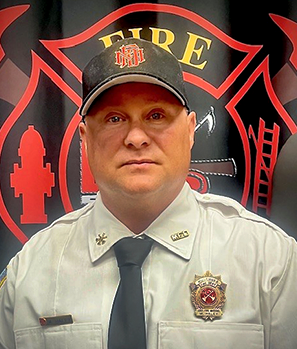
Mike Haley
Assistant Fire Marshal
Muskogee Fire Department
Loren Salzer
State Agent
Oklahoma Fire Marshal Office
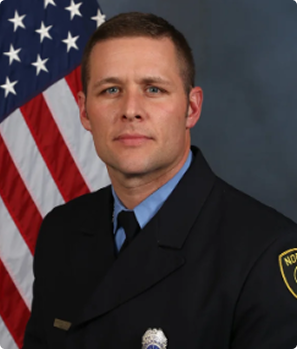
Aaron Easter
Planning Officer
Norman Fire Department